
Our Diamond
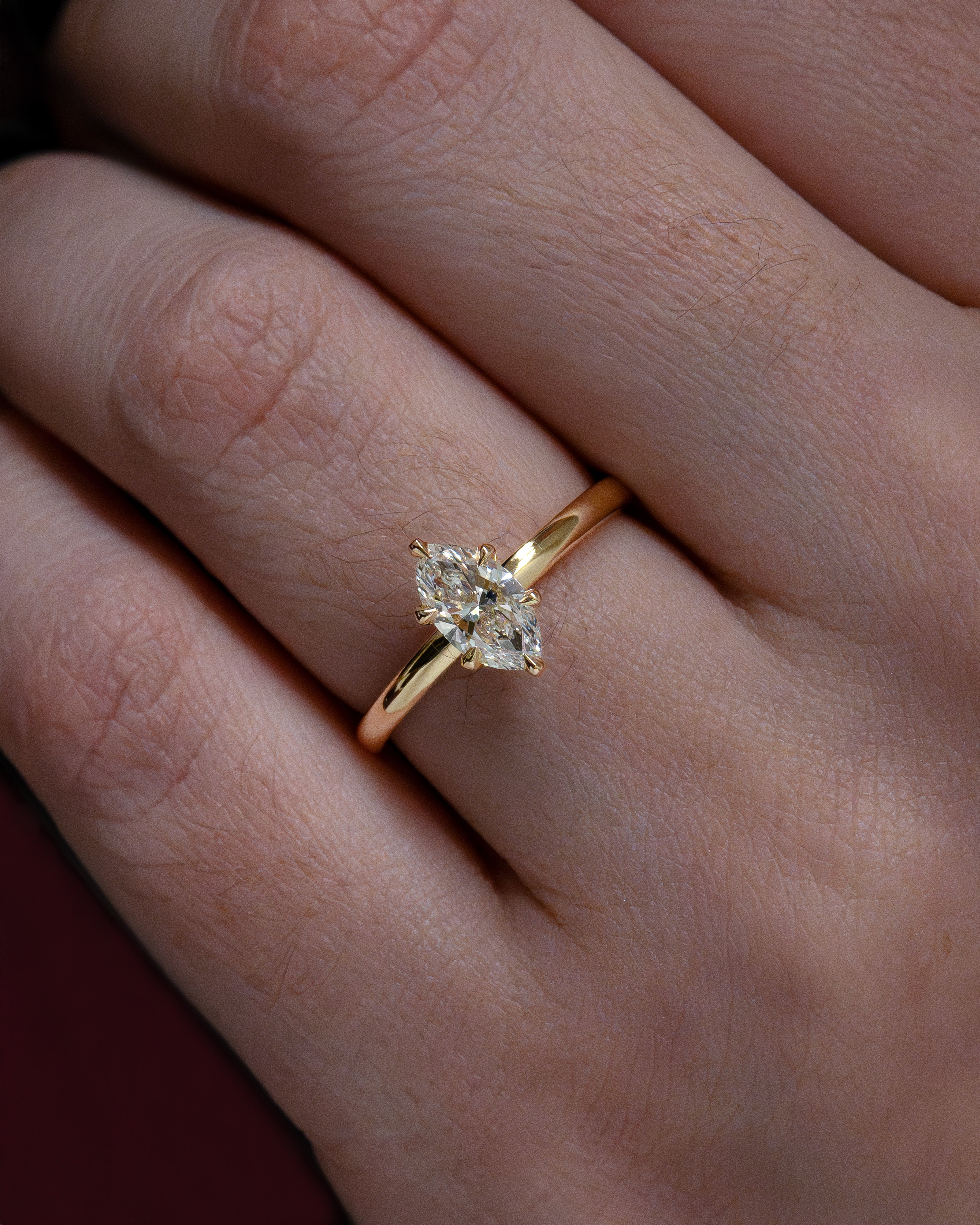
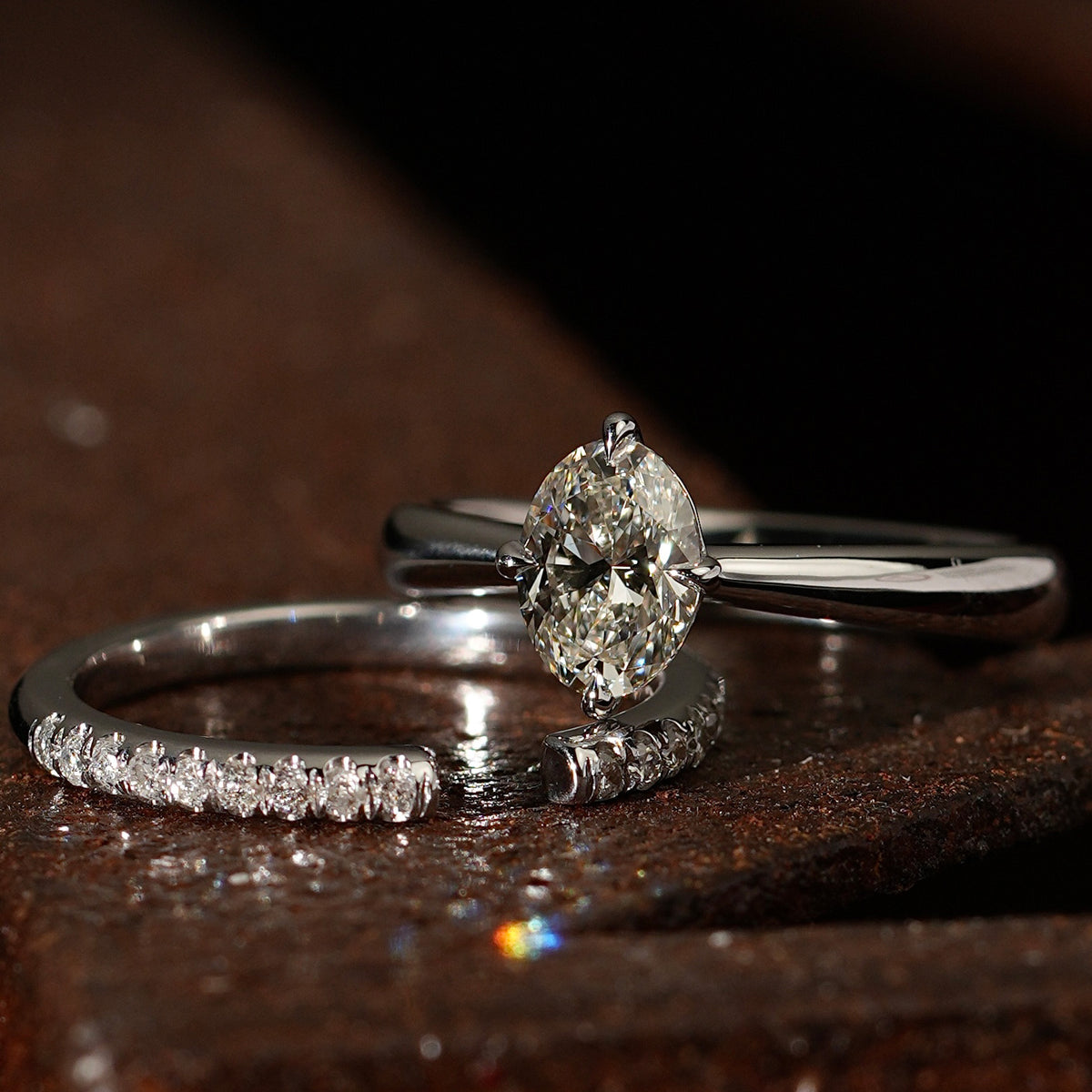
Vangolden diamonds bring together natural and lab-grown stones selected for what truly matters: cut, visual clarity, and presence in the design.
What is a Diamond
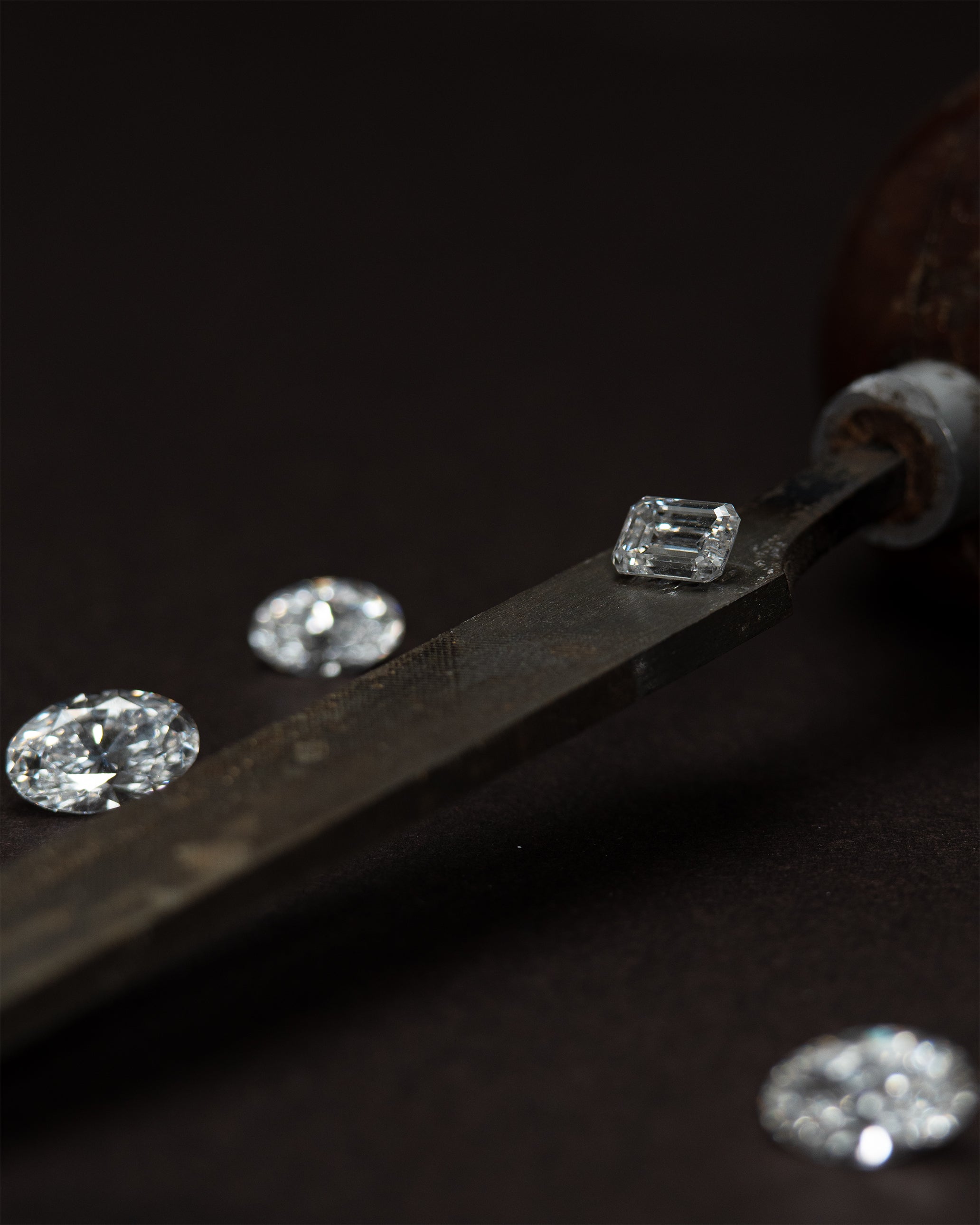
Diamond is carbon in crystalline form.
The crystal structure makes diamond extremely scratch-resistant (the highest reference on the Mohs scale) and able to reflect light very intensely when cut correctly.
Natural diamonds form over geological periods, under extreme conditions of pressure and temperature inside the Earth, and reach the surface through volcanic processes.
Lab-grown diamonds originate from the same material (carbon), but are created in a controlled environment, replicating the formation conditions through technology.
In terms of composition and appearance, both are diamonds; what changes is their origin.
The 4 Cs
The 4Cs concept was created by the Gemological Institute of America (GIA) and has become the main criterion for the classification of all diamonds.

Cut
"Cut" is not the shape (oval, round, emerald). Cut is the quality of the facet. This is one of the most important factors because it determines a diamond's brilliance.
It is how the diamond has been cut and polished to reflect light.
When the cut is well done, light enters the stone, reflects internally, and exits with great brilliance and "fire."
If the cut is poor, even a large and expensive diamond can appear dull and lifeless.
Therefore, a smaller but well-cut diamond often shines more brightly than a larger, poorly cut one.
Clarity
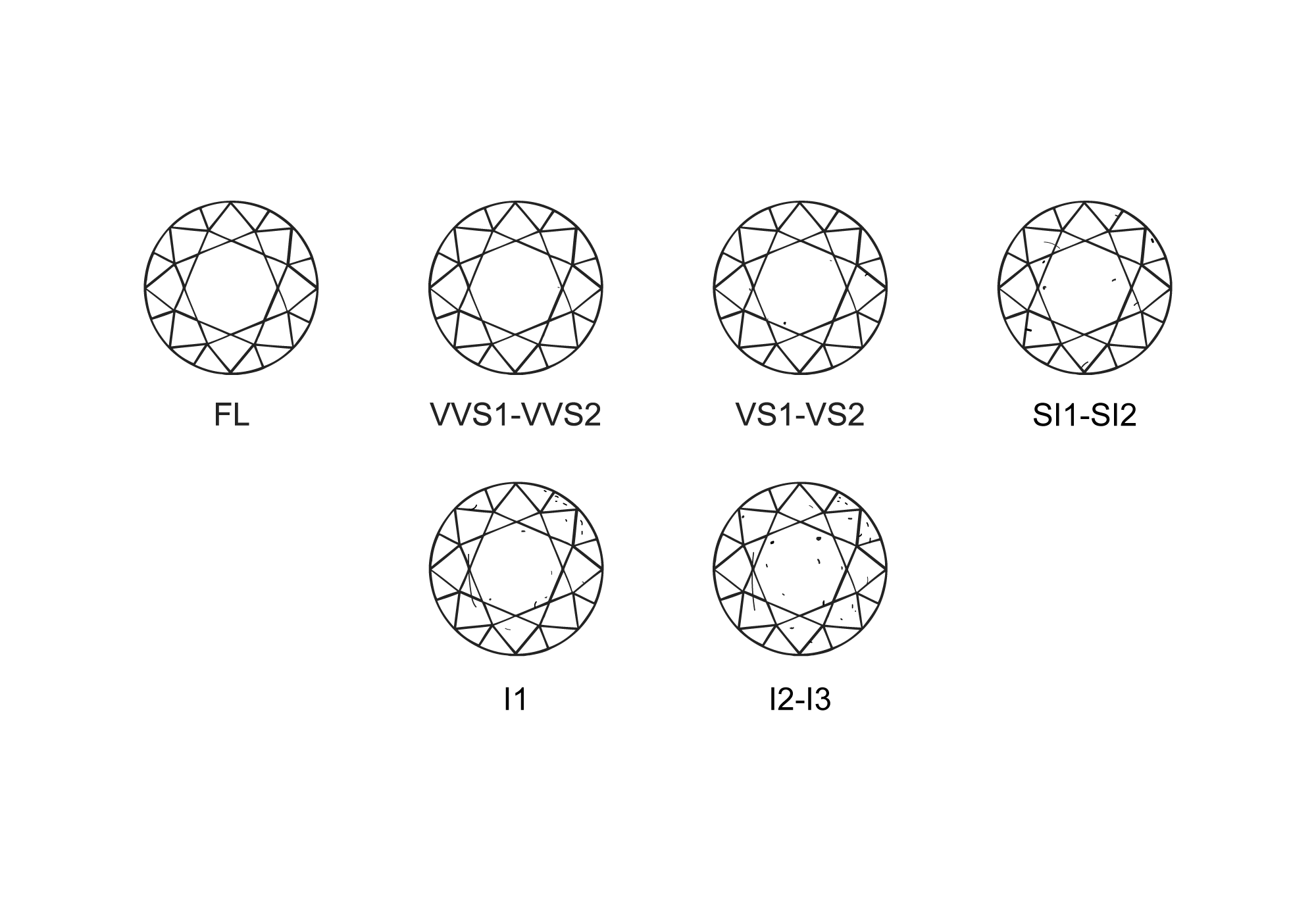
This refers to the small, natural marks a diamond may have, called inclusions or imperfections. These marks form over millions of years inside the Earth and are part of the stone's history.
Most of them are only visible with a magnifying glass and do not interfere with the diamond's brilliance or beauty.
The fewer inclusions it has, the rarer and more valuable it will be, but many diamonds with small inclusions are visually perfect to the wearer's eyes.
The GIA clarity scale ranges from the highest grades, with inclusions that are extremely difficult to identify, to grades where these characteristics can be seen more easily. It is divided as follows:
FL: Diamonds with no internal inclusions visible under magnification
VVS1 / VVS2: Extremely minute inclusions, very difficult to locate even with a loupe
VS1 / VS2: Very small inclusions, usually invisible to the naked eye
SI1 / SI2: Inclusions more noticeable under magnification, which may or may not be seen without a loupe depending on the case
I1 / I2 / I3: Obvious inclusions, with a greater impact on appearance and, in some cases, on the structure
At Vangolden, we use natural diamonds with VS+ clarity and lab-grown diamonds with VVS+ clarity.
Carat Weight
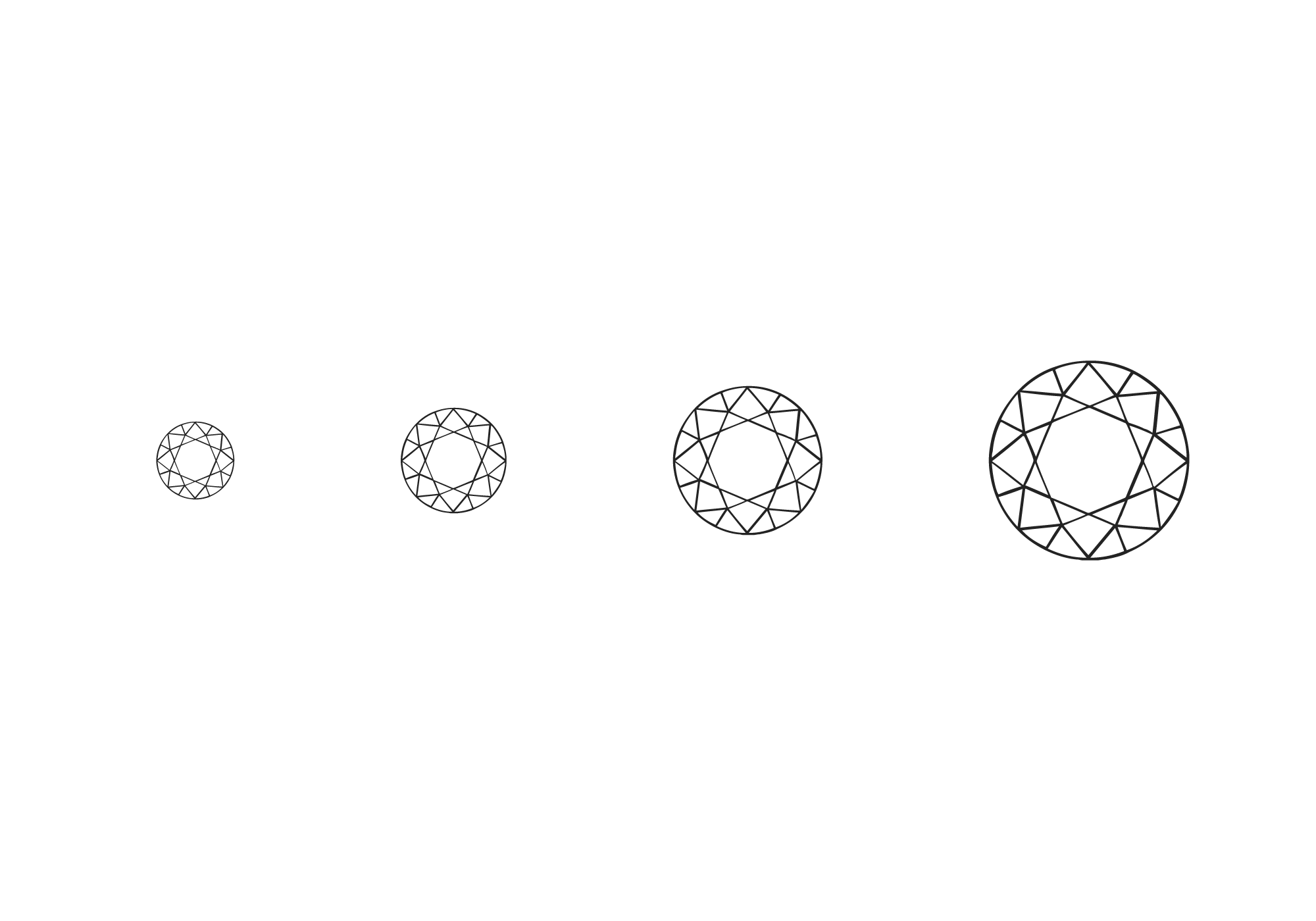
Carat is a unit of weight, not size. One carat equals 0.2 grams, and each carat is subdivided into 100 points (e.g., 0.75 ct = 75 points).
Its presence on the finger largely depends on the cut and proportions, so two diamonds of the same carat can "appear" visually different. And a basic detail to avoid confusion: carat (ct) is not karat (k), which refers to gold purity.
Color
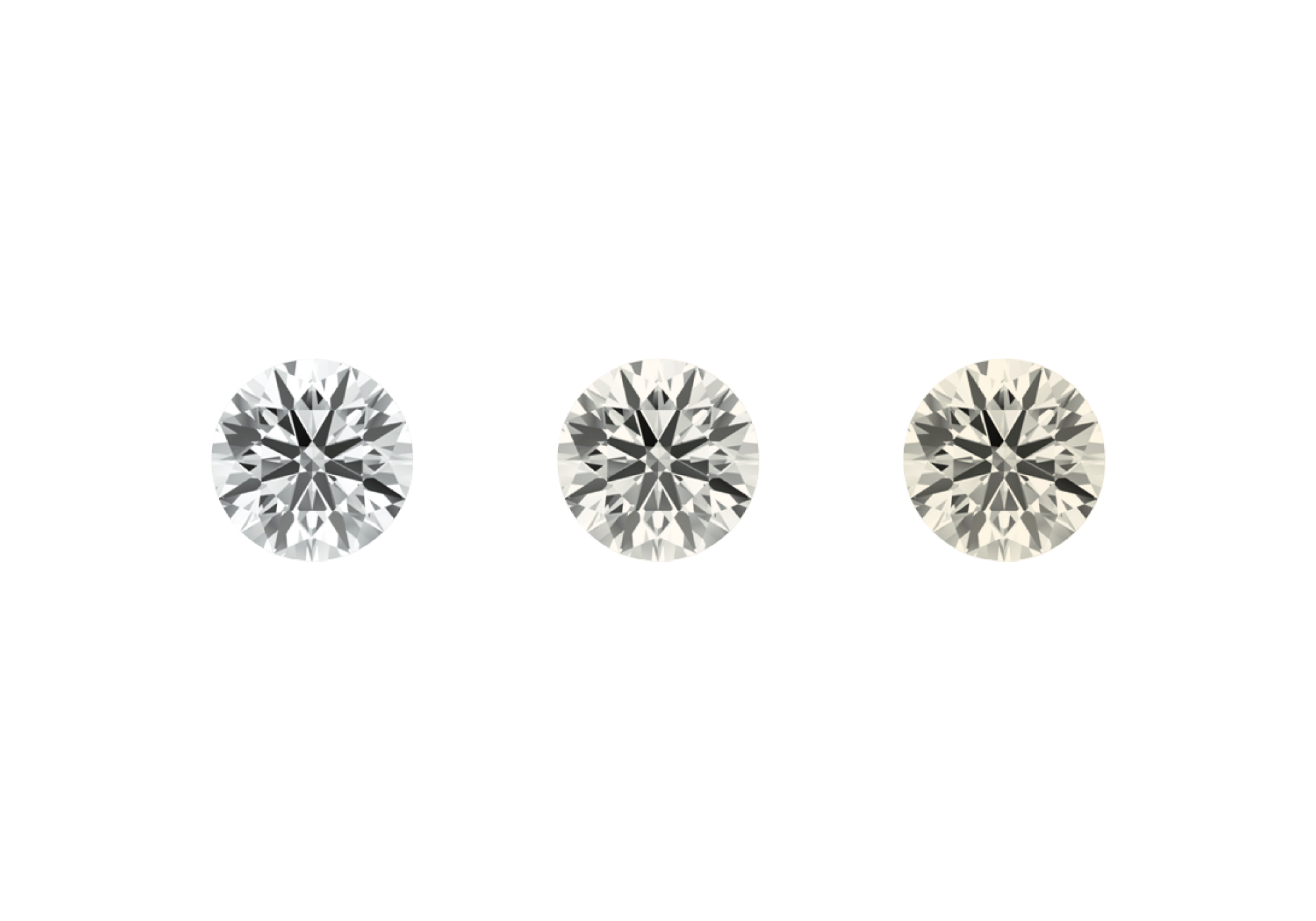
The GIA D–Z scale is the industry standard for diamonds in the "colorless to light yellow/brown" range. It begins at D (most colorless) and continues to Z as the presence of color increases.
Color grading is performed by comparing the diamond to master stones under controlled lighting and precise viewing conditions.
In practice, color influences the visual appearance of the diamond and should be analyzed in conjunction with the metal and design of the jewelry, as the visual perception can change depending on the context of the piece.
At Vangolden, we typically use natural diamonds with I-J color and lab-grown diamonds with D-E-F color.
Certification
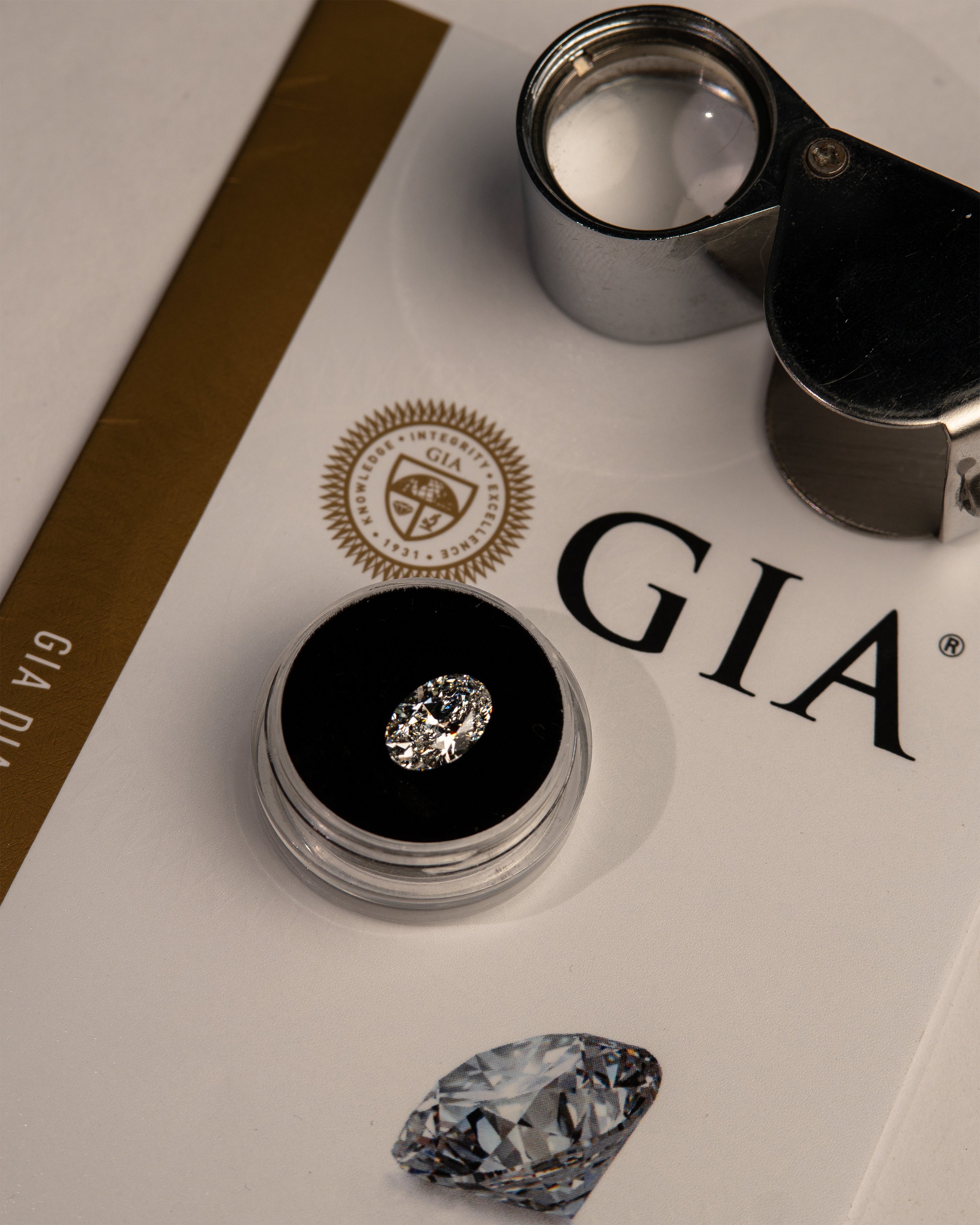
Diamond certification is a technical report issued by an independent laboratory—such as GIA or IGI—that describes that diamond and records a report number. This number is the diamond's "identity": you can check it online on the laboratory's website and ensure that the report's information matches what is being sold.
In many cases, this number may also appear as a microscopic laser inscription on the diamond's "girdle." This helps confirm that the physical diamond is the same as the report.
For natural diamonds, GIA and IGI issue reports with the diamond's characteristics (including the 4Cs and measurements).
For lab-grown diamonds, IGI also typically issues reports. GIA, however, since October 1, 2025, has started using its own evaluation system for lab-grown diamonds (with categories such as "Premium" and "Standard") to clearly differentiate them from natural diamond reports.
Today, at Vangolden, we offer recognized gemological certificates in the following situations:
•Lab-grown diamonds: starting from 1.00 ct, subject to availability;
•Natural diamonds: starting from 0.30 ct, subject to availability;

Fancy Diamonds
According to the GIA, fancy diamonds are those that display color outside the traditional D–Z range, used for diamonds from colorless to light shades of yellow or brown. This category includes colors such as intense yellow, pink, blue, and green.
These colors can arise from specific conditions during diamond formation, such as alterations in the crystal structure and other natural factors that influence their coloration.
The purer, more intense, and saturated the color, the rarer and more valuable the fancy diamond tends to be.

How to choose your gemstone
Choosing a gem has less to do with "sparkle" and more with what you want to mark at that moment and what that piece of jewelry will say in 10, 20, 50 years.
A natural diamond carries the most classic interpretation of rarity, heritage, and continuity.
A lab-grown diamond has the same composition and aesthetic as a diamond, but it aligns with a more contemporary choice, reflecting technology and traceability, while maintaining the presence and symbolism of the ring.
Neither is "better." They are two ways to tell the same story with different nuances.
At Vangolden, the decision starts with your intention—more discreet or more striking, more traditional or more modern—and the style of the piece, because it is the design that provides permanence. When proportion, cut, and setting are just right, the jewelry becomes refined and unforgettable in either option.
In the end, what prevails is the signature of our work and your story.
Our Gems
FAQ — Our Diamond
What diamond is about
In composition, yes: both are diamonds. What changes is the origin story.
Choose based on the story you want to convey and the project’s proposal. "Natural" usually aligns with tradition and heritage; "laboratory" with a more contemporary interpretation.
In both, the Vangolden result comes from design and execution.
Vangolden selection pattern
Because this standard delivers a sophisticated and very consistent look when the set is correct. A well-chosen and well-mounted I color can be extremely elegant—especially when the design and metal were conceived for that. Meanwhile, VS+ maintains excellent visual clarity to the naked eye in most cases.
However, if you want another quality range, whether to adjust your budget or follow a specific preference, we can also select diamonds with different characteristics, always transparently explaining the differences in color, clarity, and price so that your choice is informed.
Because this category allows for achieving higher standards of color and clarity more affordably than with natural diamonds. Therefore, we select lab-grown diamonds between D-E-F and VVS+, prioritizing more colorless gems with extremely discreet inclusions and excellent visual appearance.
It's the evaluation of how the diamond has been cut: proportions, symmetry, and polish. This determines how light returns to the eye. In other words: it's what separates an "ok" diamond from a diamond with presence.
At Vangolden, we will always opt for a "very good" cut as a standard.
Every piece of jewelry comes with a Vangolden Certificate of Authenticity. In addition, we also work with international gemological certification, such as GIA and IGI, available upon request.
GIA certification can be requested for diamonds starting from 0.30 ct, while IGI is usually used for diamonds starting from 1.00 ct, considering the feasibility and additional cost of the process.
Care
Yes. Hardness is resistance to scratches, not invulnerability to impact. Angled blows, especially to the girdle/edges (depending on the cut), can cause chips. This is why the setting and intended use matter.
No. Diamonds have extremely high scratch resistance, which helps them retain their surface and brilliance for many years. Even so, they can accumulate residue, grease, and cosmetics on their surface, temporarily reducing their shiny appearance without damaging the gem itself.
Lukewarm water + mild detergent + soft brush. Avoid harsh chemicals and be careful with drains (always use a strainer or wash in a basin). For deep cleaning, professional assessment is ideal.