
Our Moissanite
The highest quality alternative to diamond.
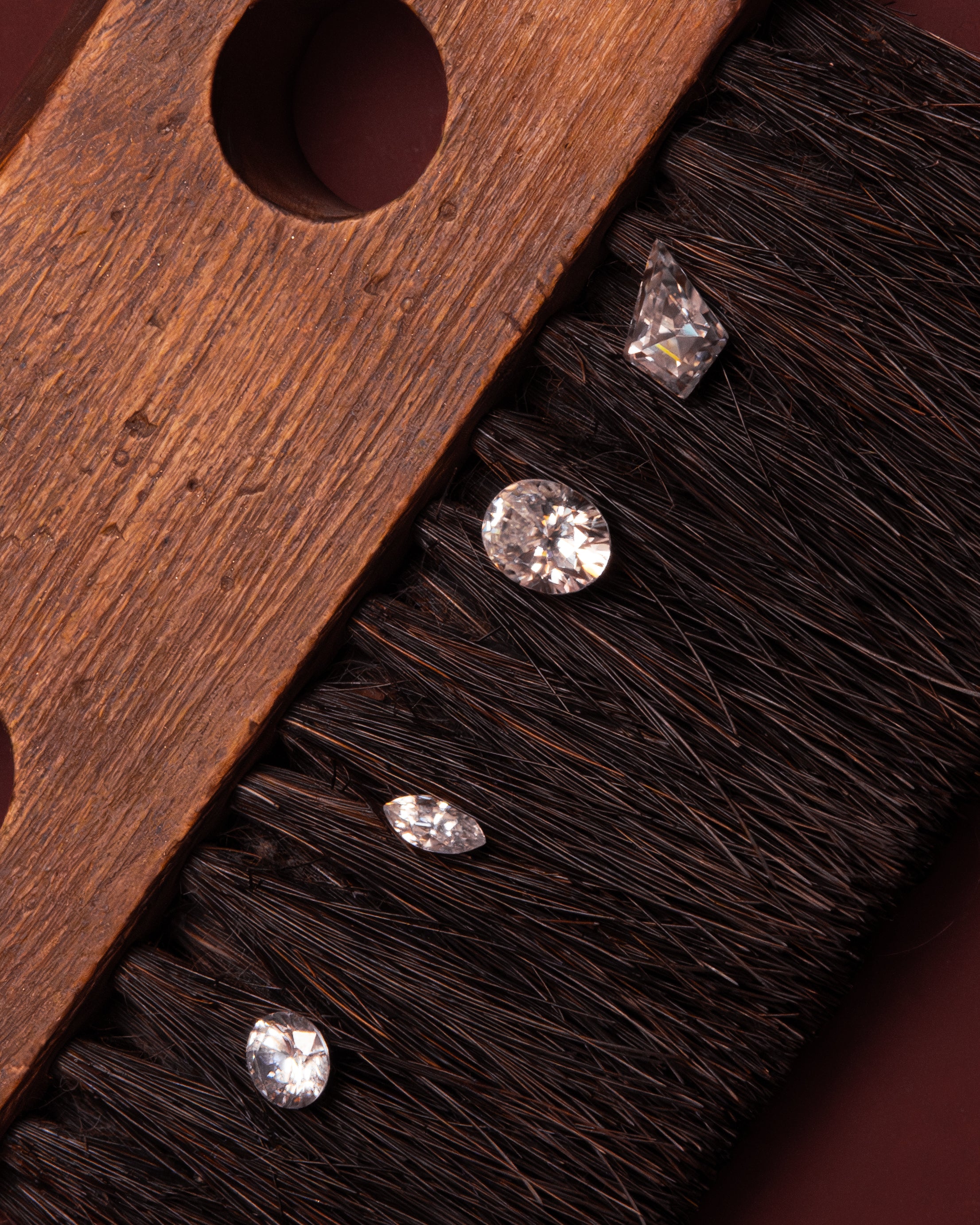
What are Moissanites?
Moissanite is a mineral formed by silicon carbide (SiC). Known as the “star gem,” it made history in 1893 when it was found inside a meteorite in Canyon Diablo, Arizona, by chemist Henri Moissan, a Nobel Prize winner. At the time, Moissan believed they were diamonds — and it wasn't until 1904 that he confirmed those crystals were, in fact, silicon carbide. Later, the mineral was named in his honor.
In nature, moissanite is extremely rare. It wasn't until 1958 that geologists identified moissanite outside of meteorites, associated with the Earth's upper mantle, in a region near Wyoming.
Today, the moissanite used in jewelry is lab-grown, in a controlled environment and with advanced technology, which makes its origin traceable and eliminates the need for mining.
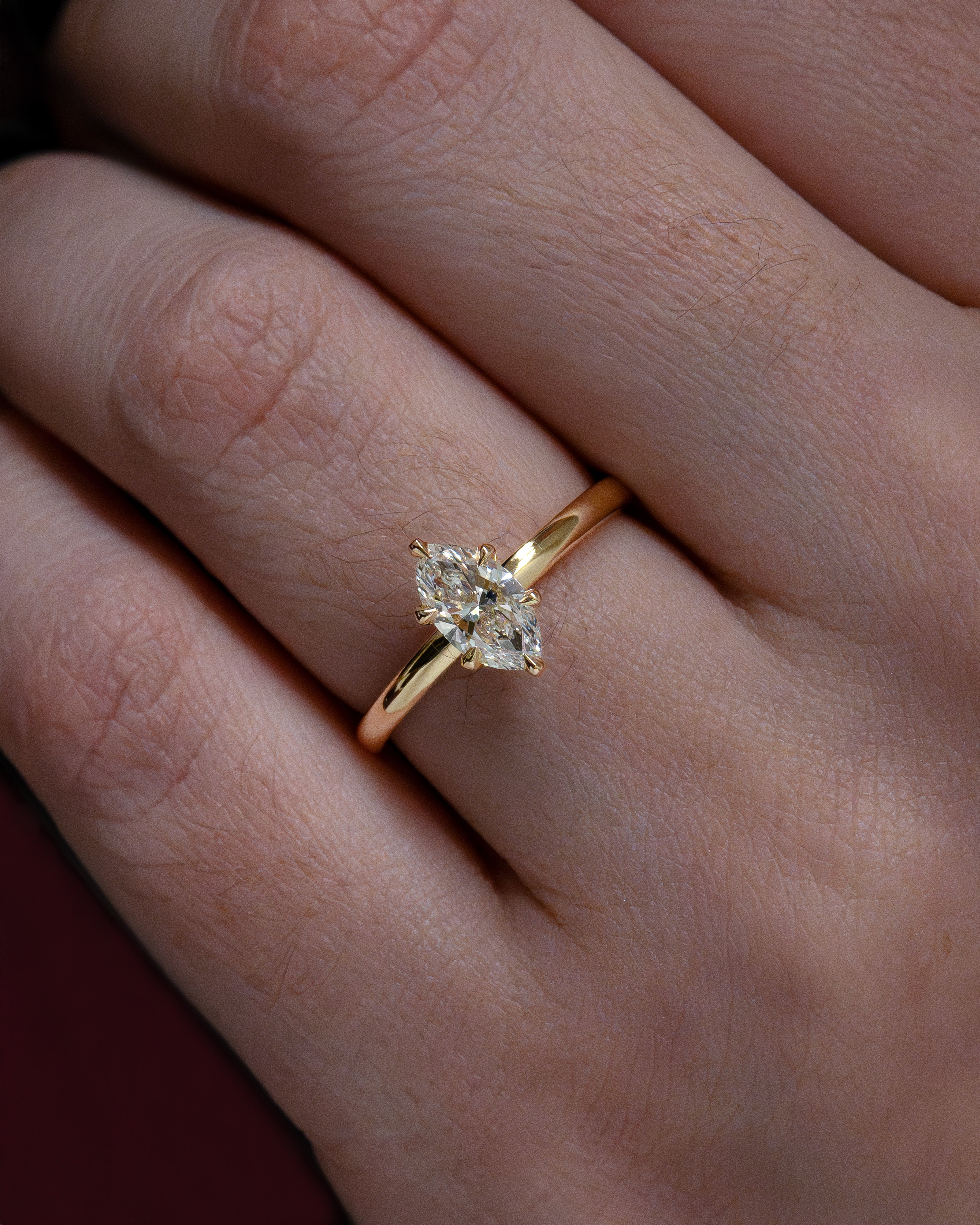
Increasingly chosen as an alternative to diamonds, moissanite is widely used in jewelry — especially as the center stone in engagement rings.
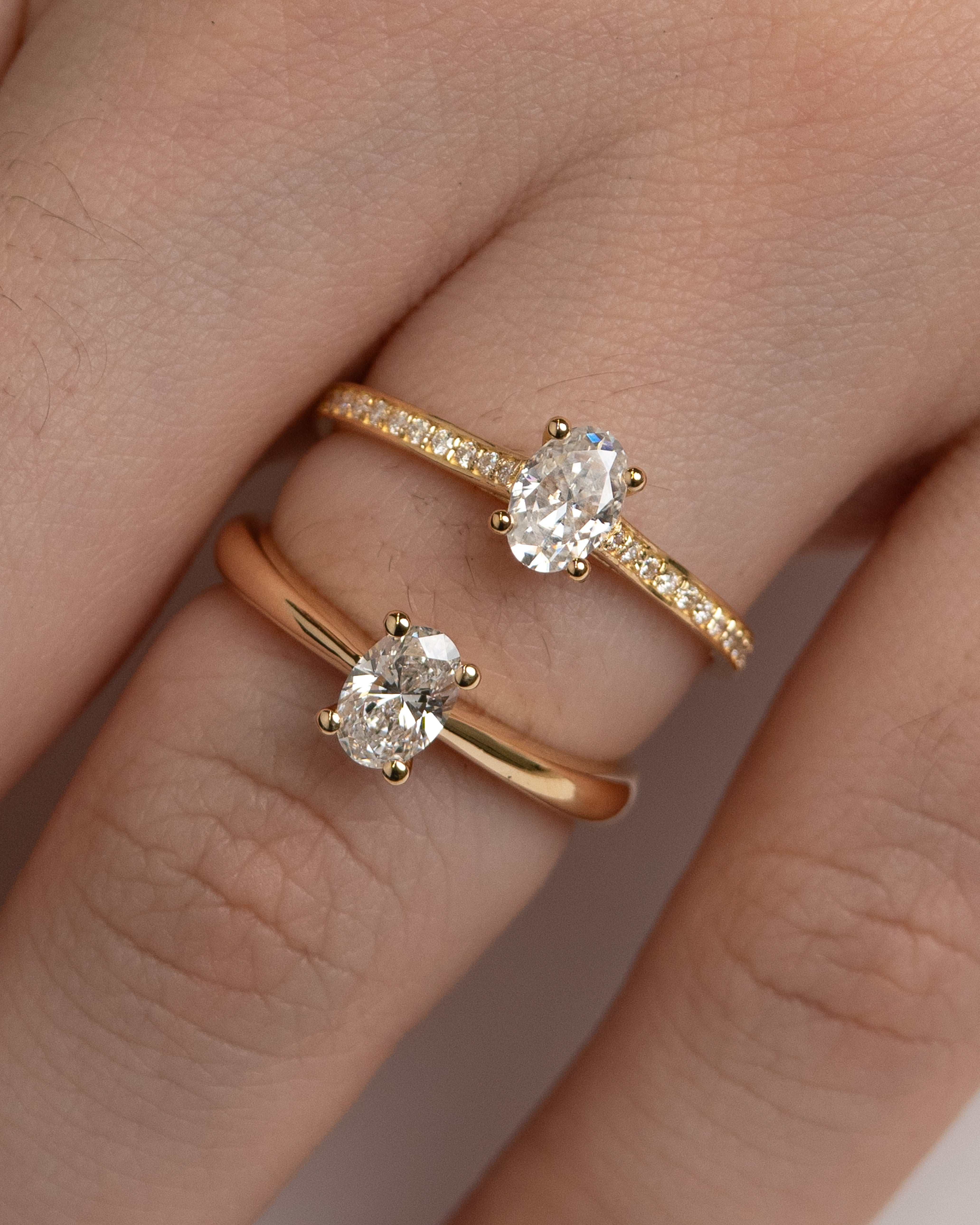
Is moissanite a diamond?
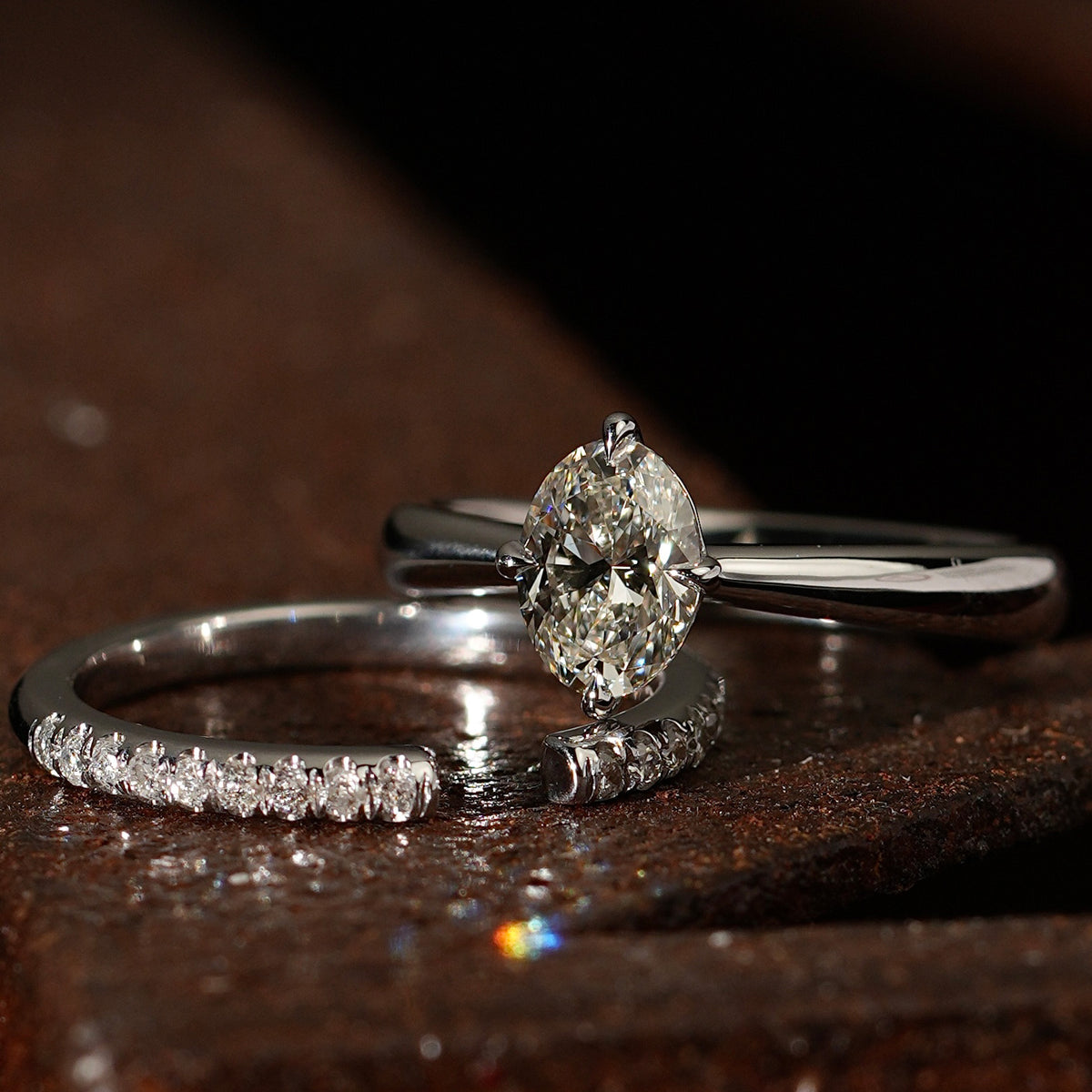
Moissanite is not diamond. They are different gemstones: diamond is carbon, and moissanite is silicon carbide (SiC). They may look similar to the naked eye, especially to those unaccustomed to observing gemstones, but their appearance and the way they reflect light are not the same.
Moissanite usually shows more colorful reflections (the so-called "fire") when it receives direct light, because it has a higher refractive index. Diamond, on the other hand, tends to a more white and classic reading. In terms of resistance, diamond is the hardest (10 on the Mohs scale), while moissanite has 9.25, an excellent level for daily wear jewelry.
In summary: they may be visually similar, but they are not the same stone! They differ in composition, light behavior, and physical properties.
Authenticity
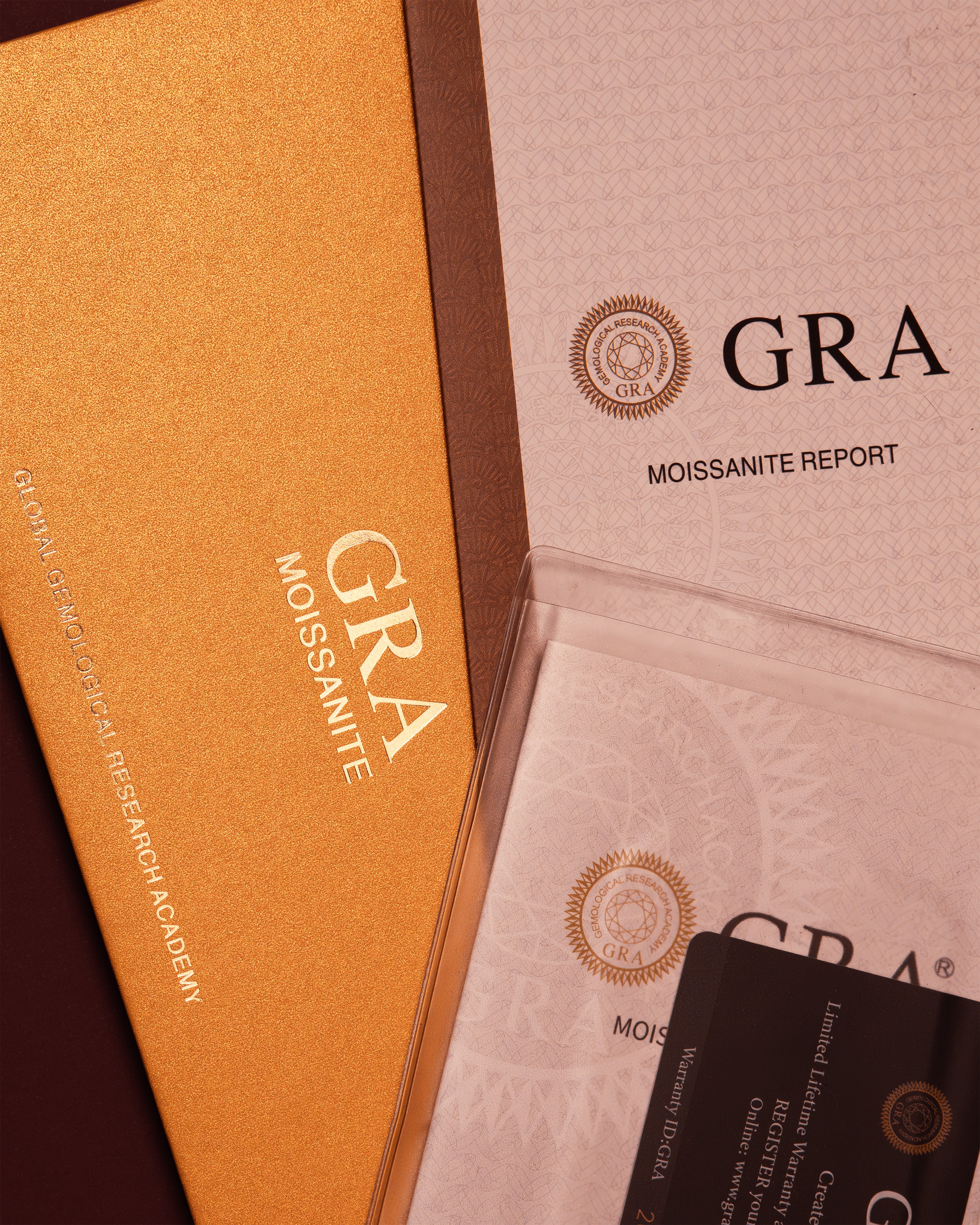
Every Vangolden jewelry piece comes with a Certificate of Authenticity from our atelier, guaranteeing the legitimacy of the raw materials and the standard of craftsmanship.
All moissanites above 0.50ct come with a GRA certificate, which ensures the authenticity, specifications, and quality of the gemstone.
Quick Comparison
Moissanite vs. Lab-Grown Diamond vs. Natural Diamond
- Intense brilliance and "fire" (greater dispersion than diamond).
- High durability: hardness ~9.25 on the Mohs scale.
- Excellent cost-benefit: striking appearance at an accessible price.
- Available in various sizes and cuts.
- $$
It's a real diamond! (same physical, chemical composition)
Visually identical to natural diamonds, with a better size-to-price ratio.- Produced in a controlled environment;
Gemological certificate for gems above 1.00 ct (upon request).- $$$
- Rarity and tradition: formed in nature over millions of years.
- Maximum hardness (10 Mohs) and classic diamond brilliance.
- Available with gemological certification for gems above 0.30ct (upon request)
- $$$$+
Moissanite vs. Lab-Grown Diamond
Visual comparison between the two synthetic gemstones.
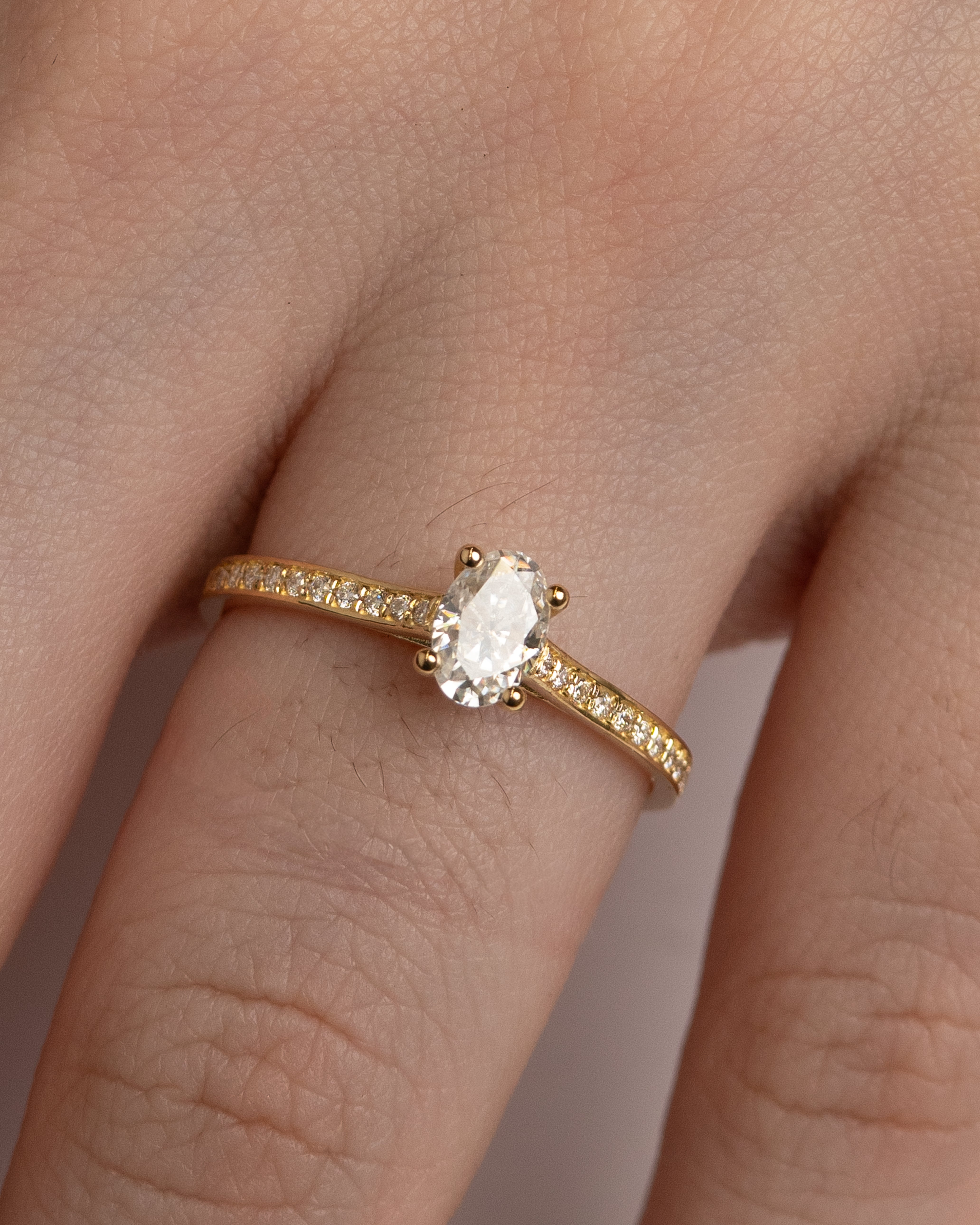
Moissanite
Fael Engagement Ring - 0.50ct Oval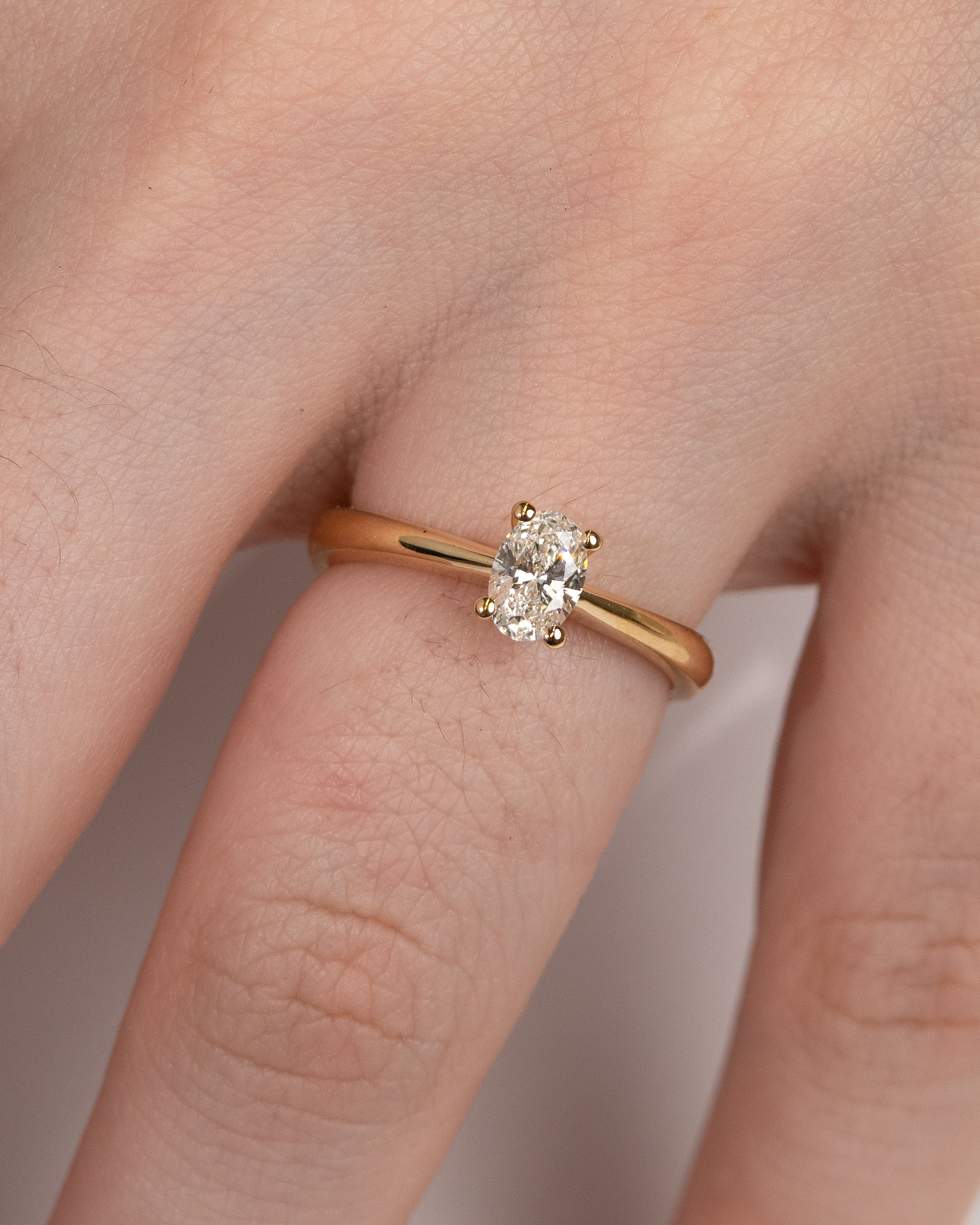
Lab-Grown Diamond
Anabel Engagement Ring - 0.40ct Oval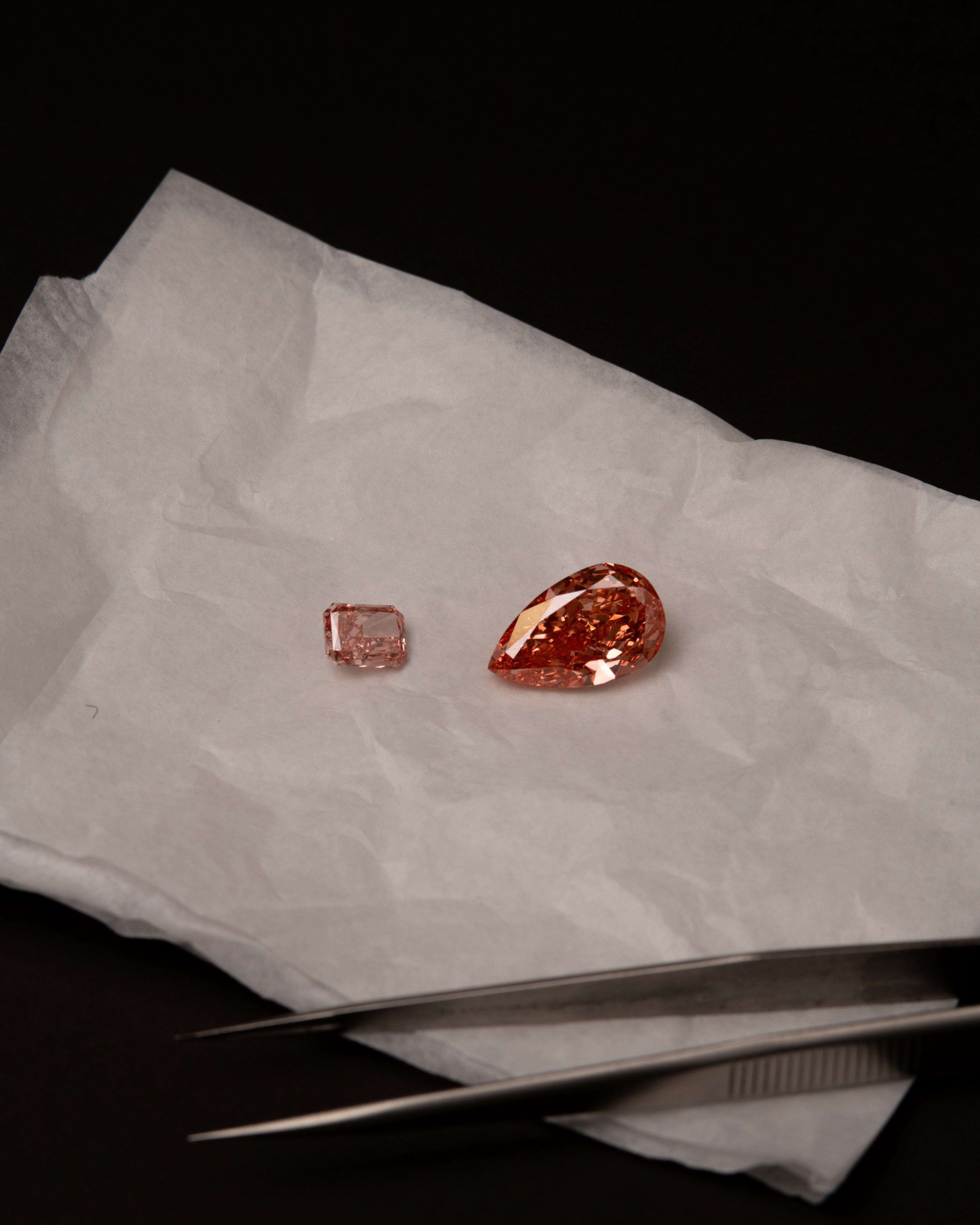
How to choose your gemstone
Choosing the gem has less to do with “sparkle” and more to do with what you want to commemorate at that moment — and what you want that piece of jewelry to say 10, 20, 50 years from now.
Diamonds carry a more traditional meaning, of heritage and continuity. Moissanite has a more contemporary character, with its own visual presence. Neither is better: they are two languages for telling different stories.
At Vangolden, the choice is based on your intention (discretion or impact, classic or original) and the style of the piece — because it is the design that gives meaning and permanence. When proportion, cut, and setting are just right, the jewelry becomes refined and unforgettable regardless of the gem; what prevails is the signature of our work and your story.
Our Gems
FAQ — Our Moissanite
About Moissanite
Yes. It's a durable gemstone for daily wear and often used as a center stone. What most determines daily durability is the ring's construction: setting, proportion, and finish.
A moissanite possui densidade diferente do diamante, por isso o peso em quilates não é a melhor forma de comparar seu tamanho. Em vez disso, usamos a medida em milímetros, que representa melhor a presença visual da gema na joia.
Quando falamos em uma moissanite “equivalente a 1 quilate”, estamos falando do tamanho aparente da pedra, próximo ao diâmetro de um diamante de 1 ct. No fim, o que importa é como a gema aparece na mão e se equilibra com o design do anel.
If your goal is to have maximum brilliance and size within budget, without being too attached to the idea that "it has to be a diamond," moissanite is the most advantageous choice. It offers great sparkle, high durability, and a much more comfortable cost.
If you insist on it being a real diamond, but want something more affordable than natural, a lab-grown diamond is an excellent middle ground: it's a diamond, with the same hardness and structure, but with a better cost.
If tradition, rarity, and the symbolism of having a diamond formed in the earth over millions of years weigh more, then a natural diamond is the way to go, assuming a greater investment.
Care Guide
Warm water, neutral detergent, and a soft brush are enough. Avoid aggressive chemicals and direct impact. For daily use, we recommend periodic review of the setting.
The stone does not "age" by becoming opaque on its own. What usually reduces its brilliance is the accumulation of residues (creams, soap, oils), especially on the underside of the gemstone. A simple cleaning restores its appearance.
It is one of the most resistant gems used in jewelry. Still, no jewelry is indestructible: impacts and friction can mark metal and damage settings. Mindful use and regular check-ups solve 99% of problems.