

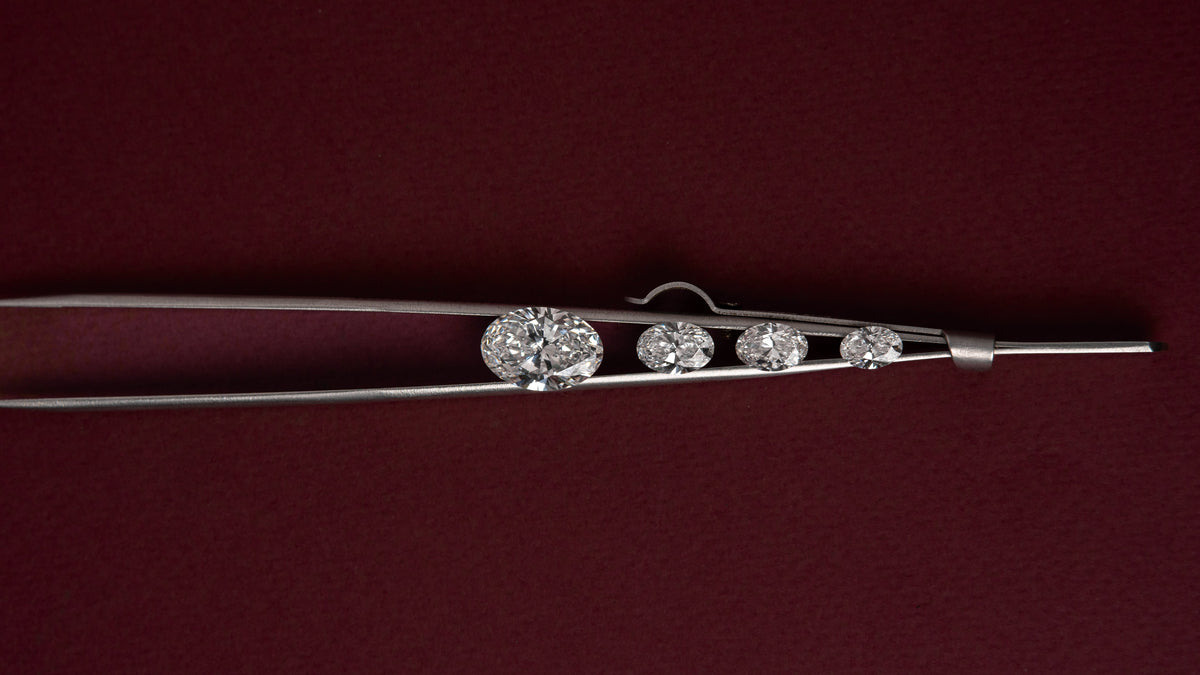
Guide to the 4Cs of Diamonds
Have you ever thought about how diamonds are graded? With the wide variety of natural and synthetic gemstones available today, it's important to understand the characteristics of these stones found in our jewelry and designs.
Understanding this grading is essential, because when choosing an engagement ring or any other piece of jewelry, you will better comprehend how experts evaluate diamonds. In this article, we will delve deeper into this classification.
Grading
Diamonds are evaluated based on four main characteristics, known as the 4 Cs: Cut, Color, Clarity, and Carat Weight. The GIA (Gemological Institute of America) is a world reference in diamond certification, using rigorous and standardized methods.
Let's understand each of these criteria simply:

1. Cut
The cut refers to how the diamond was faceted, determining its brilliance, proportion, and symmetry.
A good cut maximizes the interaction of light with the diamond, producing its characteristic "fire" and sparkle.
The GIA scale evaluates round diamonds with grades ranging from Excellent to Poor. Diamonds with excellent cuts exhibit intense brilliance and reflect white and colored light, while those with poor cuts tend to appear dull and dark.
Even with high quality in the other Cs, an inadequate cut compromises the diamond's entire beauty.
Vangolden does not sell diamonds with "Fair" or "Good" cuts. All diamonds above 0.50 carat are carefully selected, and we work exclusively with "Very Good" or "Excellent" cuts, ensuring that each stone meets our high standards of quality and value.

2. Color
Color is one of the most important aspects when choosing a diamond. It refers to the natural hue present in the gem's structure. The more colorless — or more "white" — the diamond's appearance, the higher its value and rarity.
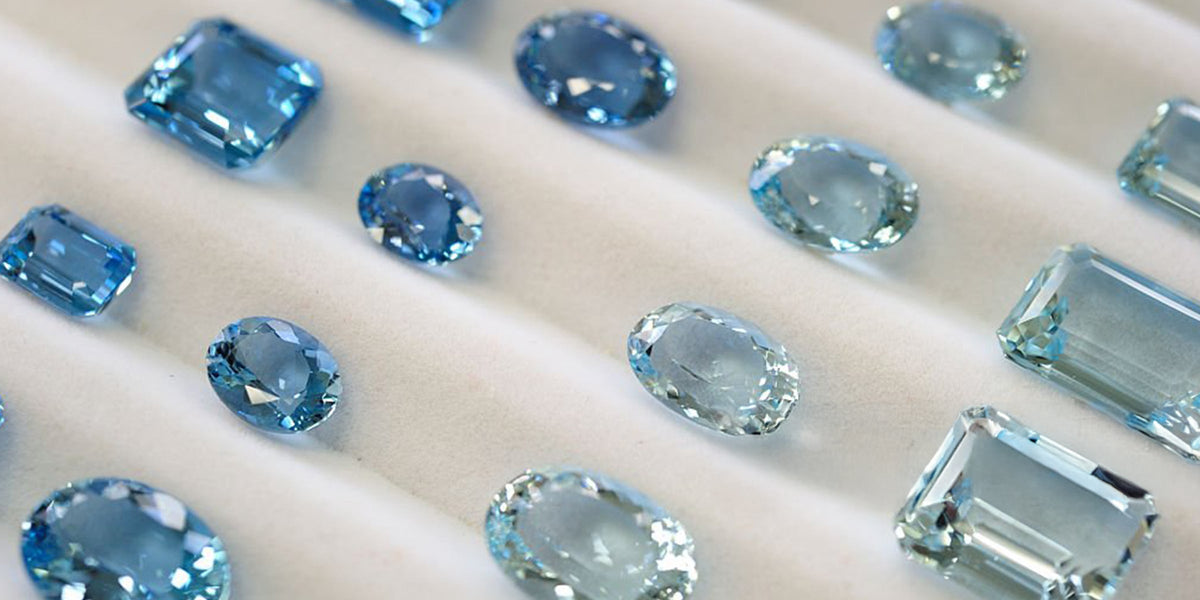
The Gemological Institute of America (GIA) classifies diamond color on a scale ranging from D (completely colorless) to Z (visible yellow or brown tones). Diamonds between D and F are considered colorless, while those from G to J are nearly colorless.
It's important to note that this scale does not apply to "fancy" colored diamonds.
At Vangolden, we prioritize quality in every detail. That's why our natural diamonds are selected with color I or J or higher, or by customer's custom order, ensuring a high standard of beauty and brilliance in every piece of jewelry.
For lab-grown diamonds, we use D-E-F color.
Check out some models here

3. Clarity
Clarity evaluates internal imperfections (inclusions) and external blemishes. The fewer imperfections, the rarer and more valuable the diamond.
Many inclusions in diamonds are so small that they cannot be seen with the naked eye, only with the aid of a loupe or microscope. When this happens, we say the diamond is "eye-clean" — meaning it has small internal imperfections that do not affect its visual beauty.
At Vangolden, we work with natural diamonds with clarity greater than or equal to VS and lab-grown diamonds with VVS1 clarity, ensuring that each stone meets our standard of visual quality.

4. Carat Weight
Carat is a measure that indicates the weight of a diamond — not its visual size, as many believe. Two diamonds with the same carat weight can appear different in size depending on the quality of the cut: very shallow or deep cuts can make the stone appear smaller or larger than it actually is.
Although carat directly influences a diamond's value, it is not the only determining factor. Cut, color, and clarity are also essential for evaluating a gem's beauty and value. The price of a diamond increases exponentially as the carat weight increases, as larger diamonds are rarer.
Even if the carat weight does not exactly correspond to the stone's dimensions, there is a common reference: for example, a round diamond with a 6.5 mm diameter weighs approximately 1 carat.

Finally...
Understanding the 4Cs is, at its core, understanding what lies behind a diamond's brilliance: proportion, color, purity, and weight working together. When you know these criteria, it becomes much easier to evaluate proposals, compare options, and confidently decide which stone makes the most sense for your story, whether it's natural or lab-grown.
If you're unsure about which 4Cs combination is ideal for your engagement ring or other jewelry, our team can help you interpret these characteristics and find the best balance between aesthetics, durability, and investment.
After all, more than choosing a diamond, you're choosing a memory that will be with you for many years.